Arcadia Ranch Homes Versus New Builds: What To Know
May 28, 2026
May 28, 2026
If you are torn between an older Arcadia home and a new build, you are really weighing two very different kinds of value. In Arcadia, the decision is often less about old versus new and more about lot quality, mature trees, neighborhood character, and how much construction complexity you are willing to take on. This guide breaks down how to compare classic Arcadia ranch-style homes with new construction so you can make a smarter move in this part of Phoenix. Let’s dive in.
Arcadia is best understood as an estate and citrus-oriented area first, not simply a postwar ranch-home neighborhood. Phoenix historic materials note that the original Arcadia plat was recorded in 1919 and laid out with lots ranging from roughly 4 to 10 acres, which helps explain why lot size and site layout still matter so much today.
That context shapes almost every home decision you make here. In the Arcadia Camelback area, Phoenix planning guidance emphasizes preserving residential character and keeping density low, so redevelopment pressure, lot configuration, and site design are part of the conversation from the start.
It also helps to be specific about which Arcadia pocket you mean. Boundaries can vary depending on whether someone is talking about historic Arcadia, Arcadia Camelback within Camelback East, or nearby Scottsdale areas that people also associate with Arcadia.
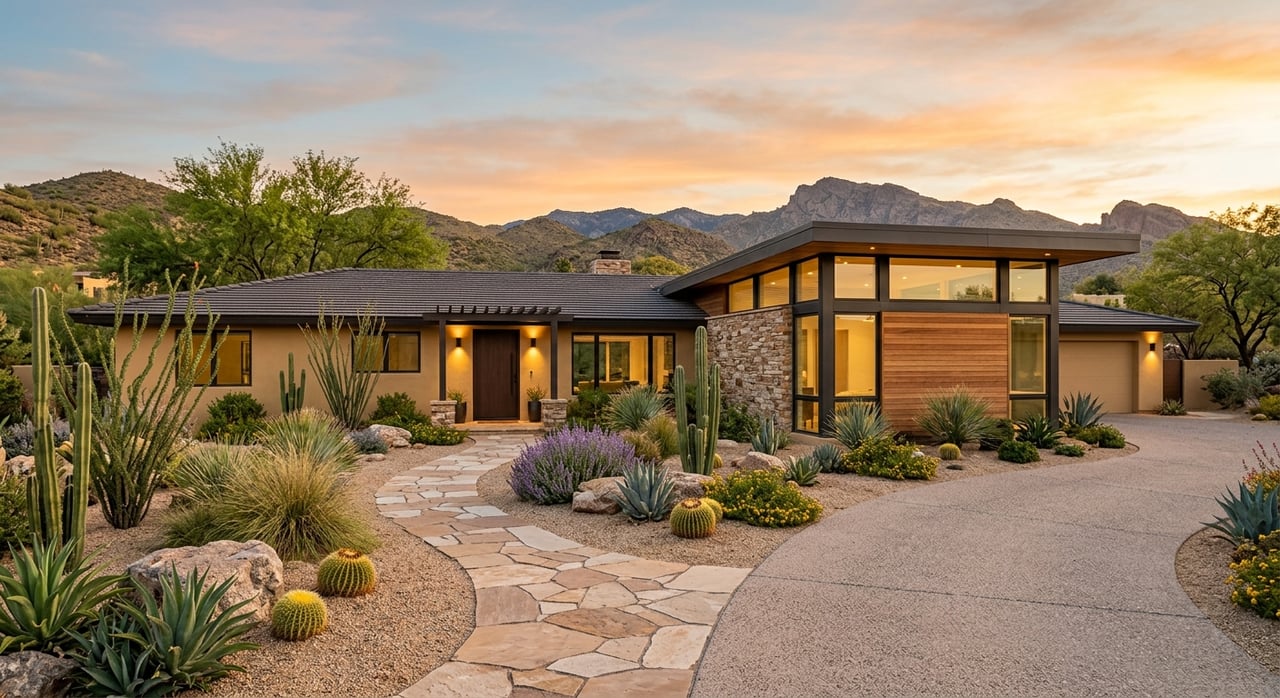
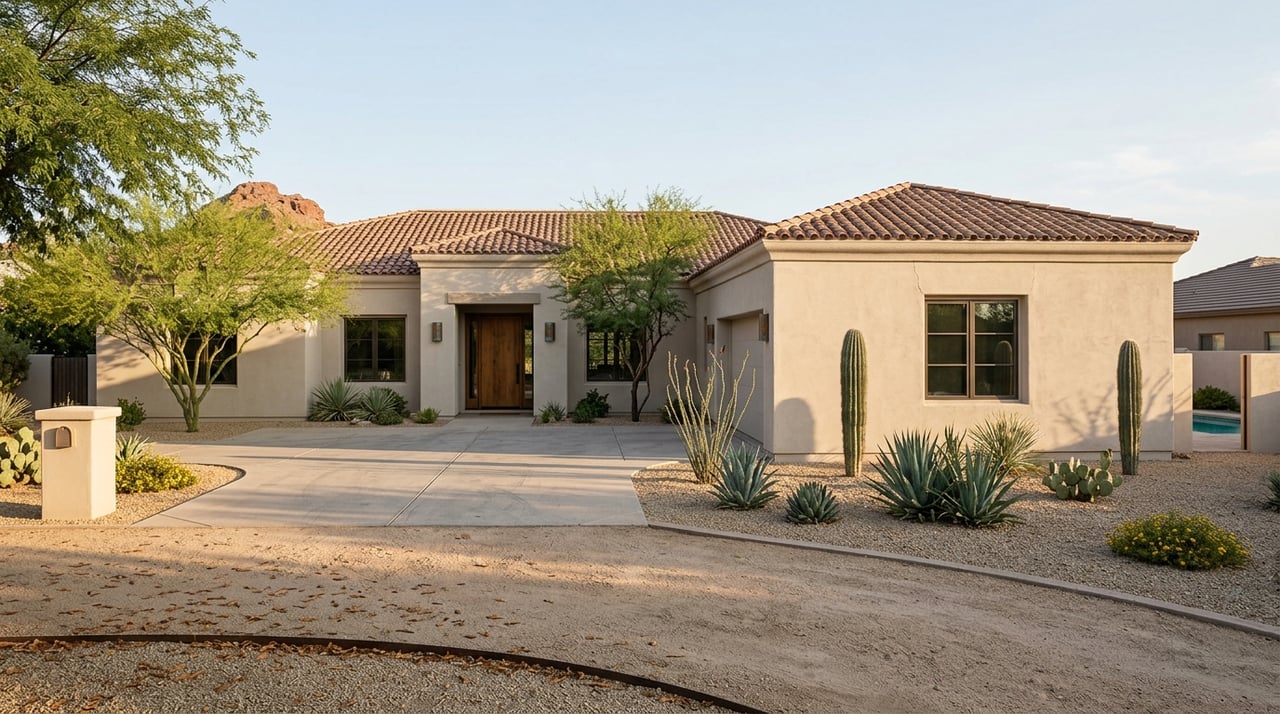
When buyers picture a classic Arcadia home, they are usually thinking of a low-profile older house on a generous lot with mature landscaping. In many cases, the site is the biggest asset, not just the floor plan or square footage.
That matters because Arcadia’s deeper lots and established yards can create a setting that is hard to reproduce. SRP explains that flood irrigation deep-waters yards, supports strong root systems, and helps sustain mature shade, which can also reduce interior heat gain and air-conditioning demand.
For many buyers, that combination creates real value. You are not just buying a house. You are buying tree canopy, outdoor living potential, and a lot pattern that reflects Arcadia’s older development history.
A well-located older home in Arcadia may offer flexibility that a smaller or more recently redeveloped parcel cannot. If zoning, setbacks, and site conditions allow, Phoenix offers a citywide ADU standard plan library that may help owners think about detached guest space or a secondary unit without immediately turning to a full teardown.
That makes classic homes appealing to buyers who see potential. You may be able to remodel, expand, or add separate living space while preserving the part of the property that is hardest to replace, which is often the lot itself.
The upside of an older home usually comes with more construction friction. Phoenix requires permits for remodels, additions, demolition, and many other residential projects, and permitted residential work is inspected.
You should also know that age alone does not make a property historic. Phoenix states that a home older than 50 years is not automatically historic, but properties that meet significance and integrity criteria and are on the Historic Property Register are subject to HP overlay zoning and special review.
That means older homes can involve more due diligence than buyers expect. Mechanical systems may be dated, prior alterations may complicate future work, and exterior changes may need city review depending on the property’s status.
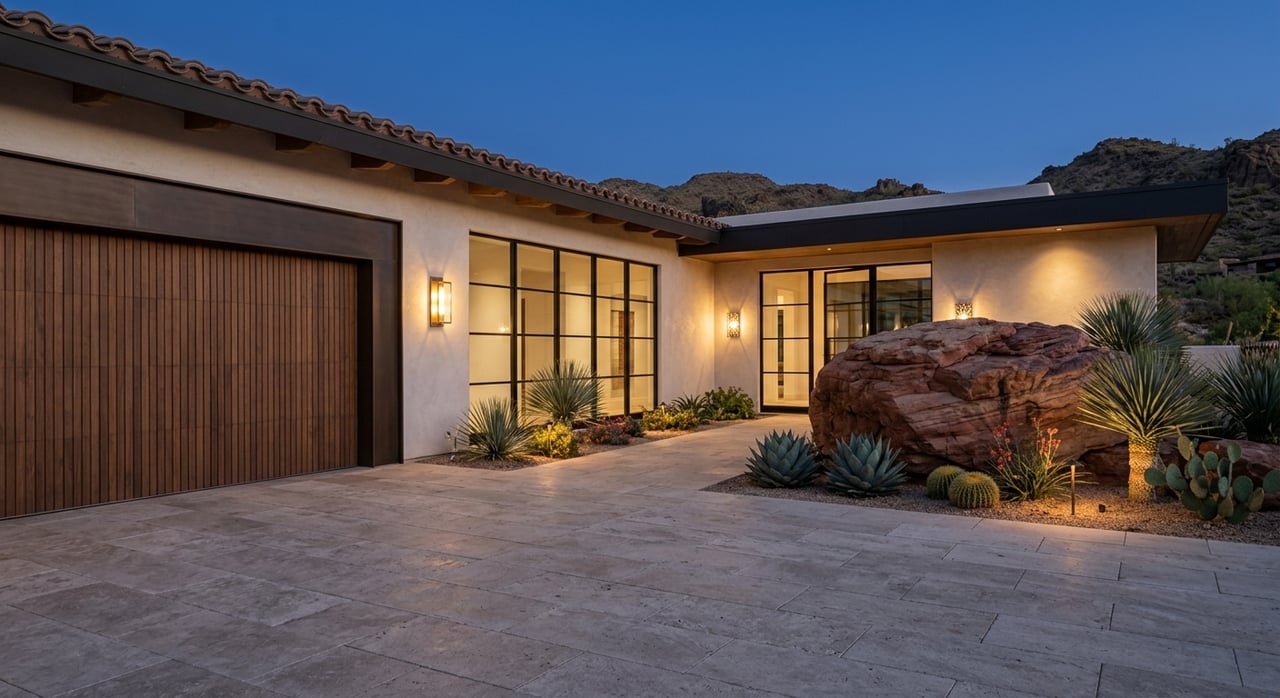
New builds attract buyers who want a more code-current home with fewer unknowns after closing. In Phoenix, that advantage became even more relevant with the city’s adoption of the 2024 Phoenix Building Construction Code, effective August 1, 2025.
That code package includes the 2024 IRC and 2024 IECC, along with local updates tied to EV readiness in one- and two-family homes, water-conservation improvements, and inclusive home design features. In practical terms, a new home can be designed around today’s standards instead of trying to retrofit an older structure later.
For many buyers, new construction offers a cleaner path. The main benefits often include:
That does not mean new construction is effortless. Phoenix notes that new homes and many major residential projects require plan review, and permitted work requires inspections, so the process still involves city oversight even if the end result feels more turn-key.
In Arcadia, a new house can solve one set of problems while creating another. A rebuild may replace the landscaping, trees, and site character that made the parcel desirable in the first place.
This is especially important in an area where planning materials emphasize preserving residential character and where irrigation-supported yards help sustain mature canopy. Even if a new house is more efficient, the loss of established shade and older site features can be a meaningful tradeoff.
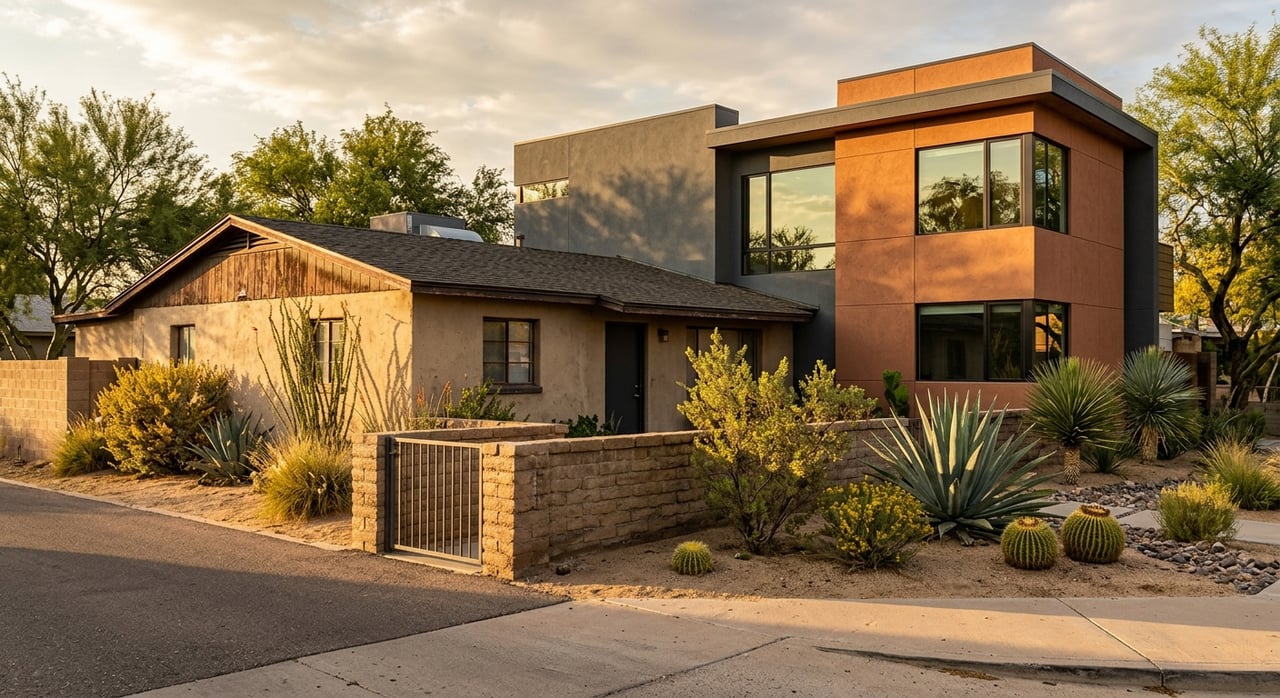
In Arcadia, the smartest comparison is often not just classic home versus new build. It is whether the property works better as a remodel, an addition project, an ADU opportunity, or a scrape-and-rebuild play.
That is where a tactical review matters. Before you compare style preferences or finish levels, it helps to work through three practical checkpoints.
If a property is listed on the Historic Property Register, or if it is pending listing, Phoenix requires added historic review. Exterior work in historic districts may require a Certificate of Appropriateness or Certificate of No Effect, and demolition of listed or pending-listing properties can trigger additional review.
This step should come first because it can directly affect your options. If you are thinking about a teardown or major exterior changes, you want clarity on review requirements before you start running renovation or redevelopment numbers.
Once you understand the regulatory side, evaluate what the lot can actually support. In Arcadia, that means looking at setbacks, driveway placement, tree preservation, irrigation infrastructure, and whether a larger addition or detached unit is realistic.
This is where many properties separate themselves. A large lot with strong site utility may support a thoughtful remodel or expansion that preserves character while improving function.
After that, look hard at the existing house itself. Roof condition, foundation, mechanical systems, and how much of the floor plan would need to shift all matter.
If the structure is sound and the lot is exceptional, a remodel may be the best long-term value. If the layout is highly compromised or the systems are near the end of their life, rebuilding may be the cleaner path.
The strongest way to compare these properties is to focus on what is hardest to replace. In Arcadia, that is often the lot pattern, mature landscaping, irrigation-supported shade, and the overall site feel.
A classic home may need work, but it can preserve land value and neighborhood character in a way that is difficult to recreate from scratch. A new build may offer better performance and fewer repair surprises, but sometimes at the cost of losing the setting that made the property special.
For buyers, that means your best option depends on what you value most. If you want efficiency, code-current systems, and a more predictable ownership experience, a new build may fit. If you care most about lot quality, shade, outdoor living, and long-term flexibility, an older Arcadia home may offer the stronger play.
For sellers, this same framework can shape pricing and positioning. Some properties are best marketed for their existing home and lifestyle appeal, while others carry more value as lot opportunities for buyers focused on redevelopment or a custom plan.
There is no universal winner between Arcadia ranch-style homes and new builds. The right choice depends on the parcel, the condition of the existing structure, the city review path, and your timeline, budget, and goals.
In a neighborhood shaped by estate-era lots and low-density planning, the site often drives the decision more than the house itself. If you compare properties through that lens, you will usually make a better call and avoid expensive surprises.
If you are weighing whether a property is best kept, expanded, or repositioned as a redevelopment opportunity, working with someone who understands Arcadia at the lot level can make the process much clearer. For strategic guidance on buying, selling, or evaluating a redevelopment candidate in Arcadia, connect with Taylor Smart.
Stay up to date on the latest real estate trends.
Trust in him for expert guidance and unmatched market insight in Phoenix real estate. From high-value listings to strategic buying, he delivers drive, precision, and results—contact him to elevate your property goals.