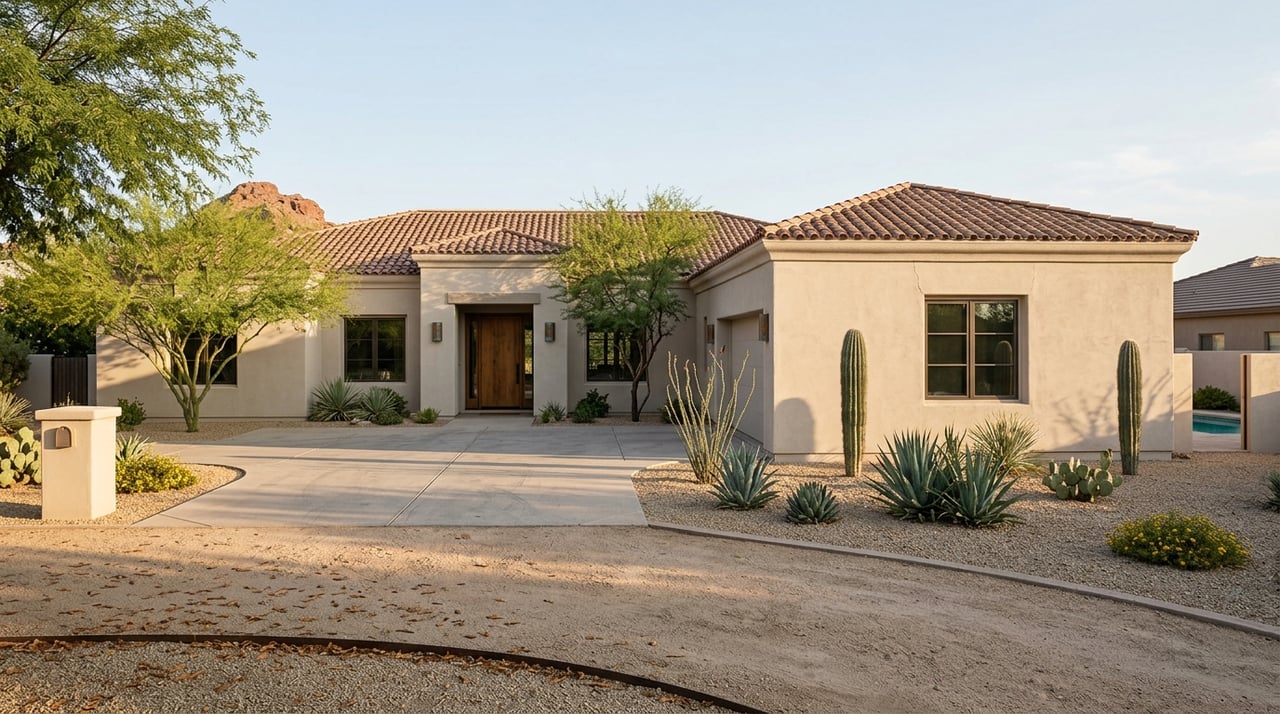
Should You Sell Your Paradise Valley Estate to a Builder?
May 7, 2026
May 7, 2026
If you own an older Paradise Valley estate, you may be sitting on two kinds of value at once: a luxury home for today’s buyer and a redevelopment site for tomorrow’s builder. In a market where pricing sits firmly in the multi-million-dollar range, that difference can shape how you price, package, and present your property. The key is knowing what builders actually look at, what the Town of Paradise Valley will require, and how to position your estate without leaving money on the table. Let’s dive in.
Paradise Valley sits in a rare price tier. Recent market snapshots show a median sale price of $4.8 million, an average home value of $3.31 million, and a median list price of $5.5 million, depending on the source and methodology used.
That pricing backdrop matters because older estates are not always evaluated only for their current finishes or floor plan. In Paradise Valley, a property can also attract attention for its lot, zoning fit, access, and redevelopment potential.
The Town’s low-density zoning framework supports that dual positioning. In the R-43 district, the stated intent is to preserve low-density residential character, open space, and natural features, which means your estate may appeal both to a buyer who wants to enjoy it as-is and to a builder analyzing what the site can become.
When builders review a Paradise Valley property, the lot often drives value first. The existing house still matters, but many redevelopment buyers begin with parcel size, width, setbacks, frontage, and overall usability.
For example, Paradise Valley’s zoning table shows large development standards in common residential districts. In R-43, minimum lot size is 43,560 square feet, minimum lot width is 165 feet, front and rear setbacks are 40 feet, maximum floor area ratio is 25%, and building height is limited to two stories.
In R-35, the minimum lot size is 35,000 square feet, minimum lot width is 150 feet, front and rear setbacks are 40 feet, maximum FAR is also 25%, and height is limited to two stories. Those standards help define what a builder may be able to keep, change, or rebuild.
A builder is usually trying to answer a simple question fast: Is this site clean enough to underwrite with confidence? The faster your property answers that question, the more credible the interest can become.
In practical terms, builders often prefer parcels with:
Paradise Valley’s subdivision standards reinforce why these details matter. The Town requires adequate vehicular access, expects lots to meet zoning area and width standards, and generally discourages multi-frontage lots except in limited situations.
Sellers sometimes assume a large existing house automatically adds more value for a builder. In reality, the structure may be viewed partly as a cost item, especially if it limits the site’s usable envelope or creates extra demolition, redesign, or approval work.
Paradise Valley’s flatland residential submittal requirements show the numbers that matter most in this analysis. The Town asks for net lot size, square footage by structure, total combined square footage, FAR, lot coverage, lot disturbance, and the accessory-to-main-home square-foot ratio.
Those figures help a builder sort your estate into one of three buckets:
If the current improvements already fit the parcel well, that can support value. If they crowd setbacks, overcomplicate the site, or consume too much of the practical building envelope, the house may be seen as an obstacle rather than an advantage.
Two properties with similar square footage can receive very different builder attention if one has cleaner site access and fewer constraints. That is especially true in a market like Paradise Valley, where large lots do not always mean easy redevelopment.
The Town’s standards make this clear. Adequate vehicular access to a public street is required, lot width and access cannot fall below zoning standards, and corner lots must still allow proper orientation and setbacks.
For you as a seller, this means raw lot size alone is not enough. A buyer evaluating redevelopment potential will also want to understand:
These details can directly affect timing, design flexibility, and carrying costs, which in turn can affect pricing.
If your property is on hillside land, builder interest may still be strong, but the underwriting becomes more complex. Hillside properties in Paradise Valley face a separate review process and can involve more time, cost, and approval risk.
The Town’s hillside code applies to land shown on the hillside map and to land where the natural terrain under the building pad has a slope of 10% or greater. The Hillside Building Committee reviews new homes, additions, remodels, accessory structures, pools, solar panels, and other exterior changes tied to regulated hillside property.
That review can cover:
No building permit may be issued until that committee approves the application. For a builder, that can add real schedule and cost considerations before construction even begins.
The Town’s review guide shows that hillside projects may require added materials and protections, including a Construction Staging Plan, a Safety Improvement Plan, financial assurance before demolition or construction, increased insurance, and outside technical review in some cases at the applicant’s expense.
There is also an expiration issue to keep in mind. Hillside approvals expire within one year of approval or until the related building permit is active.
That is why hillside sellers should never market a property with vague redevelopment language alone. If your estate has hillside relevance, your package should clearly show what is known, what has already been approved, and what still needs review.
Builder buyers do not just buy land. They buy process risk. In Paradise Valley, that process can start before a formal permit application is even submitted.
The Town’s Planning Division reviews subdivision plats, lot splits and combinations, special use permits, and zoning compliance plan reviews. The Town also requires a Planning Pre-Application before most entitlement, zoning, or building permit applications when a project involves zoning relief, lot division, public right-of-way or easement changes, or certain conditional uses such as private roads.
That means one of the most common builder questions is not just, “What can I build here?” It is also, “What process will I have to go through to get there?”
If a parcel may need a variance, sellers should avoid presenting that as a certainty. Paradise Valley states that variances may be requested through the Board of Adjustment and are based on property hardships such as topography, unusual lot size or configuration, or location. In other words, relief may be possible, but it is not automatic.
If you want serious builder interest, a basic listing sheet is not enough. You need a data-backed property package that helps buyers assess feasibility quickly and with fewer assumptions.
Start with the core ownership and parcel documents. The most useful base file includes:
Maricopa County notes that the APN appears on the deed legal description, and parcel tools may connect to the recorded plat and deed. Exact pins and measurements should still be verified by a registered land surveyor.
A strong Paradise Valley redevelopment package should go beyond marketing photos and room counts. The Town’s Planning Application Portal shows that submittals may require items such as:
This is the kind of information that helps a builder move from curiosity to underwriting.
Your package should make zoning compliance easier to read, not harder. Paradise Valley’s flatland submittal guide specifically calls for property lines, rights-of-way, existing and proposed structures, setbacks measured to walls and roof overhangs, easements, washes, net lot size, square footage breakdowns, total combined square footage, and accessory structure ratios.
If setbacks are within 3 feet of minimum or height is within 2 feet of maximum, the Town flags those conditions for special certification. Details like that can affect how a builder prices risk, so they should be organized up front.
For hillside estates, your package should be even more complete. Include any prior Hillside Building Committee approvals, geotechnical reports, drainage studies, staging plans, safety materials, and summaries showing disturbed versus preserved areas of the site.
That level of preparation can help separate your listing from others that only market the view or lot size. Builders want beauty, but they also want clarity.
One of the smartest ways to position a Paradise Valley estate is to market it on two tracks at the same time. You want the property to speak to luxury retail buyers and to builders without confusing either audience.
The retail track should present the home on its finished-luxury merits. That includes architecture, livability, privacy, scale, and the overall ownership experience.
The builder track should present the parcel as a redevelopment opportunity with a clean fact set. That means zoning, dimensions, access, hillside status, site constraints, and approval history should be easy to review.
This dual-track approach fits Paradise Valley especially well because the market supports high-end retail pricing while the Town’s zoning and review process make feasibility analysis a meaningful part of value.
When builders evaluate a property, the most persuasive points are usually the least emotional ones. Big claims about “unlimited potential” do less work than verified facts.
Focus your positioning around the details that matter most:
The cleaner these facts are, the easier it is for a builder to make a fast and credible offer. At the same time, retail buyers still get the information they need to evaluate the estate as a premium home.
In a high-dollar market, presentation is not just cosmetic. It is strategic. If your estate may attract redevelopment interest, the wrong positioning can narrow your buyer pool, confuse pricing, or leave important value drivers unexplained.
A tactical listing strategy helps you control that narrative. Instead of forcing buyers to guess at lot potential, process hurdles, or site constraints, you present the estate with the clarity that serious buyers expect.
That is especially important in Paradise Valley, where lot quality, code fit, and hillside complexity can influence value just as much as interior finishes. The better your preparation, the stronger your negotiating position tends to be.
If you are weighing whether your property should be marketed as a luxury residence, a redevelopment opportunity, or both, a data-driven strategy can make all the difference. For tailored guidance on positioning, packaging, and exposing your estate to the right buyers, connect with Taylor Smart.
Stay up to date on the latest real estate trends.
Trust in him for expert guidance and unmatched market insight in Phoenix real estate. From high-value listings to strategic buying, he delivers drive, precision, and results—contact him to elevate your property goals.