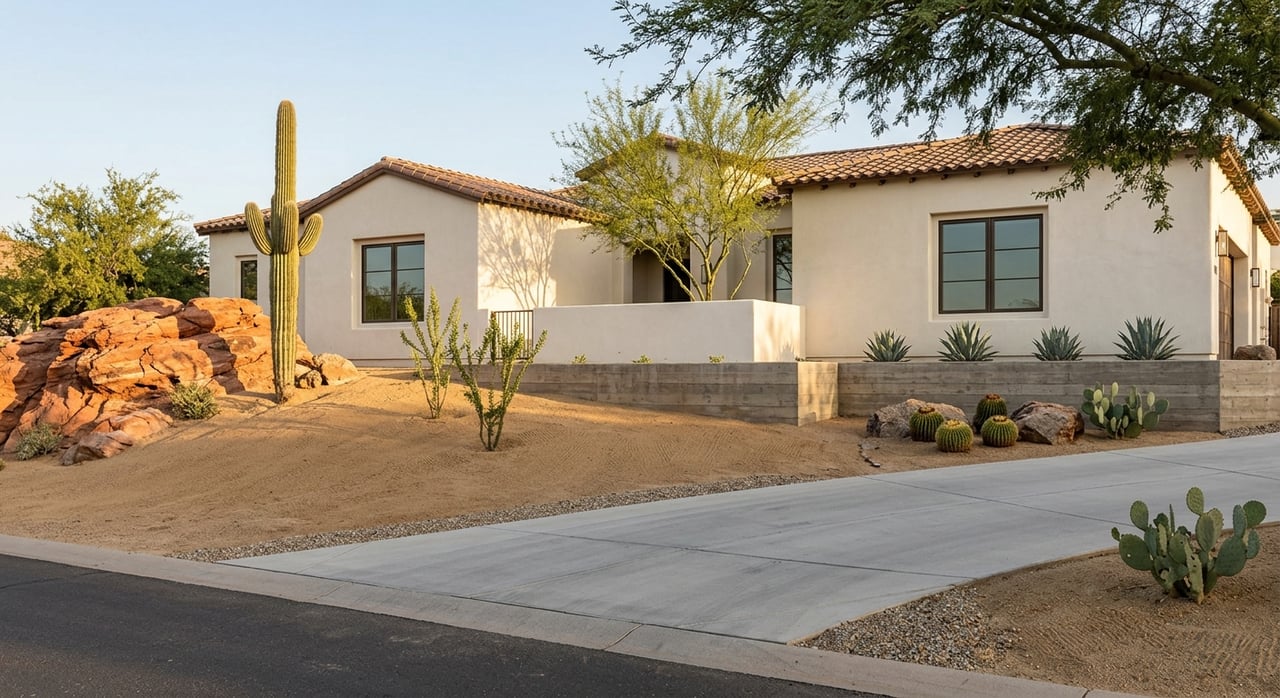
Smart Ways to Evaluate Paradise Valley Lots for New Builds
April 2, 2026
April 2, 2026
Buying a vacant lot in Paradise Valley can look simple on paper, but new-build potential often comes down to details you cannot afford to miss. A parcel may have great size or strong view potential, yet still face limits tied to slope, drainage, access, utilities, or zoning. If you are comparing lots for a custom home, spec project, or long-term investment, knowing how to evaluate those factors early can save you time, money, and frustration. Let’s dive in.
In Paradise Valley, lot evaluation is usually less about raw acreage and more about how the site can actually be used. The town’s planning framework emphasizes low-density residential character, natural desert features, drainage patterns, native vegetation, minimal nighttime lighting, and protection of visually significant corridors such as Lincoln Drive and Tatum Boulevard, according to the Town of Paradise Valley General Plan.
That means two lots with the same square footage can have very different build outcomes. Before you focus on home design ideas, start with the physical traits of the parcel and how they interact with the town’s rules.
One of the first questions to answer is whether the parcel is hillside-designated, or whether the natural terrain under the building pad has a slope of 10% or greater. Paradise Valley’s Public GIS Maps Portal shows mapped hillside areas along with slope, elevation, and ridgeline data used for that determination.
This matters because hillside lots are reviewed differently. On those sites, the Hillside Building Committee reviews land disturbance, height, grading, drainage, lighting, and materials, which can directly affect design flexibility, review timelines, and construction planning.
Topography affects more than appearance. It can shape your grading costs, pad placement, retaining needs, driveway layout, and how much of the lot remains practical for outdoor living.
In Paradise Valley, height standards are also intended to preserve openness and views of Mummy Mountain, the Phoenix Mountains, and Camelback Mountain, as outlined in the town’s adopted planning documents. A lot with strong view potential may still need careful analysis to determine what can be built within the allowed envelope.
Desert lots need a close look at drainage. Paradise Valley notes that washes and arroyos collect stormwater and can flood when capacity is exceeded, and the town’s Engineering Department reviews grading and drainage plans for new homes and remodels to maintain historical flow patterns and provide stormwater retention, as explained on the town’s wash maintenance and drainage information page.
If a parcel sits near a wash or low area, that should be part of your due diligence from day one. The same town resource points buyers to floodplain information and free floodplain determinations through the Maricopa County Flood Control District, which can help you better understand flood exposure before you commit.
A lot may be large, but that does not automatically mean it can support the size or layout you have in mind. In Paradise Valley, zoning standards define what can fit through minimum lot size, width, setbacks, floor-area ratio, number of stories, and height limits.
For example, the town’s Height and Area Regulations show that:
These standards are the starting point for fit analysis. You need to know not just the lot size, but also whether the shape, frontage, and setbacks allow the home footprint you want.
Height review can be more nuanced than buyers expect. For non-hillside R-43 and R-175 lots, the code includes an additional height test that prohibits a building from penetrating a plane that starts 16 feet above the 20-foot setback line and rises at a 20% slope toward the center of the lot, according to the same town regulations.
The code also sets maximum building heights by lot size:
If you are evaluating a lot for a larger custom build, roof deck concept, or expansive second-story design, this is a key checkpoint.
Hillside parcels have their own standards under Paradise Valley’s Hillside Development Regulations. Those rules use a 24-foot imaginary plane parallel to existing natural grade, keep the underlying zoning setbacks in place, and add requirements tied to lighting and exterior materials.
The hillside code also states that materials should blend with the natural setting and that no lighting is allowed in undisturbed hillside areas. For buyers and builders, that means the lot may support a distinctive home, but only within a tighter framework that respects the site’s natural character.
Driveway access can be a major design factor, especially on corner lots, double-frontage lots, or curving streets. Paradise Valley classifies streets by function, and local streets are intended to serve nearby residences while limiting through traffic, according to the town’s street and roundabout information.
The town’s zoning code also uses recorded plats, adjacent properties, and street hierarchy to determine the front yard for some lots. If the front-yard designation changes, nearby owners within 600 feet must be notified and may appeal that decision. In practical terms, access and frontage are not just site-planning details. They can influence setbacks, driveway placement, garage orientation, and the overall building layout.
Utility service is parcel-specific in Paradise Valley, and assumptions can be costly. The town states there are three water providers, including Berneil Water Company, City of Phoenix Water Services, and EPCOR Water Company, plus two sewer providers, while many properties still use septic, according to the town’s utility services page.
That is why a utility check should happen before the purchase is finalized. You want to know who serves the property, whether sewer is available, whether septic work may be involved, and whether any off-site utility improvements could affect timing or cost.
Not every issue is visible from the street. Existing improvements, easements, and nonconforming conditions can all affect what you are able to build or keep.
Paradise Valley publishes official zoning interpretations on issues such as accessory structures with a new single-family residence, nonconforming structures, basements and FAR, setback questions, and underground driveways or garages. That is a strong signal that these details deserve specific review during escrow, especially if the parcel already has site improvements or partial structures.
Some lots move forward cleanly, while others need zoning relief, a lot split, or easement or right-of-way changes. In Paradise Valley, the Planning Application Portal states that a Planning Pre-Application is required for most zoning-relief requests, lot splits, and right-of-way or easement changes.
The same process notes that the Planning Commission reviews subdivision plats and lot splits, while the Board of Adjustment hears variance requests such as extra height, setback deviations, or additional floor area. If a lot only works with relief from the current standards, you should understand that entitlement risk before treating the site like a sure thing.
Once a lot clears your purchase diligence, construction review becomes the next layer. Paradise Valley’s permit information notes that work in the town right-of-way requires an engineering permit, and that this may include driveway, sidewalk, and utility work outside the right-of-way when engineering review is needed.
For hillside lots, the application package can be more extensive. Depending on the site, the town may require items such as:
This is another reason lot selection matters. Two properties at a similar price point can carry very different review paths and project costs.
When you are evaluating Paradise Valley lots for a new build, the order of operations matters. The most useful early sequence, based on the town’s posted procedures and review framework, is to:
That process helps you move from broad interest to lot-level confidence before you are fully committed.
In Paradise Valley, limited undeveloped land means every vacant parcel gets judged on more than size. The right lot is one where physical conditions, zoning, utility access, and entitlement risk line up with your build goals.
If you are weighing a scrape, a custom home site, or an investment purchase, tactical diligence is what keeps a promising deal from turning into an expensive surprise. If you want a sharper read on lot potential, redevelopment value, or off-market land opportunities in Paradise Valley, connect with Taylor Smart for a focused, local perspective.
Stay up to date on the latest real estate trends.
Trust in him for expert guidance and unmatched market insight in Phoenix real estate. From high-value listings to strategic buying, he delivers drive, precision, and results—contact him to elevate your property goals.