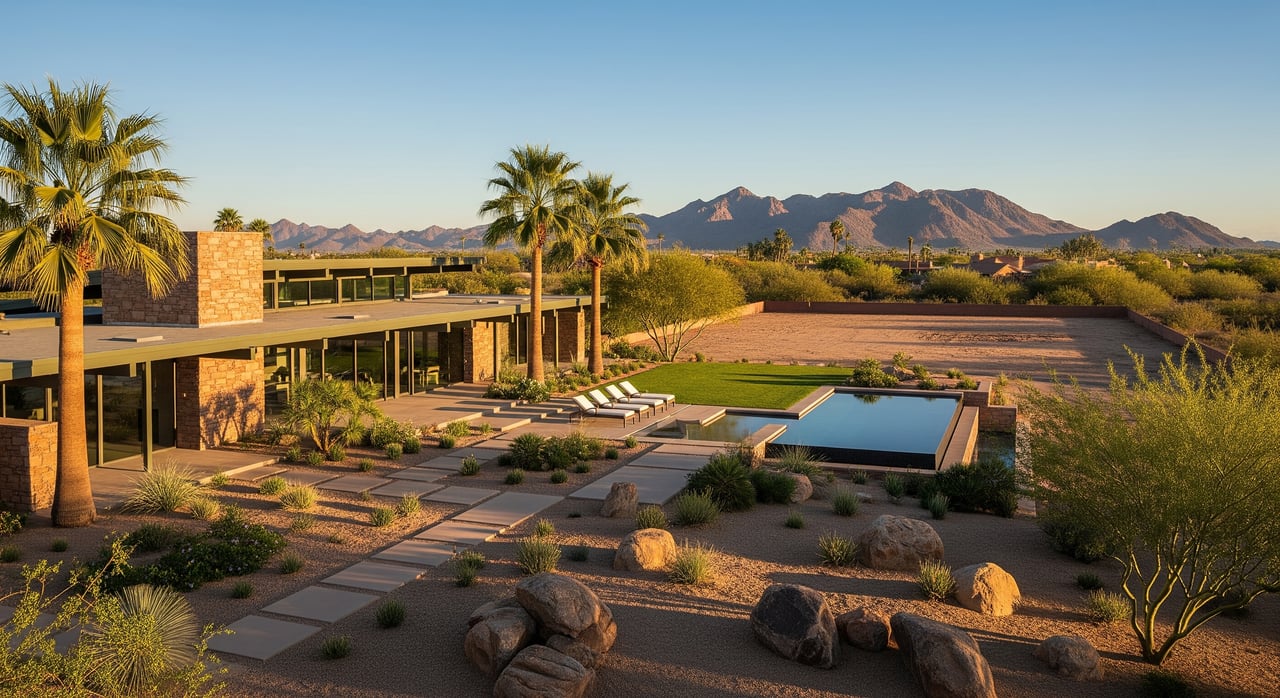
Pricing Paradise Valley Homes With Redevelopment Value
January 1, 2026
January 1, 2026
Wondering if your Paradise Valley lot might be worth more than the house on it? In a town with limited buildable land and luxury demand, the land often drives price. If you plan to sell, pricing redevelopment value correctly can unlock serious equity and speed up your timeline. This guide shows you how to confirm what is buildable, estimate land value, manage risk, and position your property to attract qualified builders and high‑net‑worth buyers. Let’s dive in.
In Paradise Valley, redevelopment value reflects what a buyer can build under current rules and how the market will value the finished product. The structure on the lot may not drive pricing if it is outdated or sized below what buyers expect for the area. Many buyers value the lot for its potential rather than the existing home.
Common scenarios include a teardown and replacement single‑family estate, rare lot splits where allowed, and occasional parcel consolidations for larger compounds. Renovations that keep the footprint can make sense, but the highest value often comes from new construction on premium lots. Buyer pools usually include luxury builders, well‑capitalized owner‑builders, and investor groups.
Entitlements, not just demand, set your ceiling. Before you talk price, confirm what is actually allowed on the property. A few early calls and documents can save months.
Ask planning staff for a zoning verification or summary that includes:
Keep this printout in your file. It anchors pricing conversations and buyer due diligence.
Do not assume a split is allowed. Paradise Valley generally favors large lots. Whether you can split depends on subdivision rules, minimum lot sizes, and frontage requirements. If a split is critical to your value, plan for added time, public process, and uncertainty.
Setbacks, lot coverage, and height limits define your buildable envelope. Variances are possible but require a public process that adds time and risk. Buyers pay more for certainty, so pricing improves when you can show a compliant building area without variances.
Confirm sewer versus septic, water availability, power locations, and drainage requirements early. Washes, FEMA floodplains, steep slopes, and native plant rules can reduce usable area. Utility capacity can also limit what you can build.
You have two primary ways to estimate land value. Use both to cross‑check your number.
Pull recent sales of vacant or teardown‑ready lots in Paradise Valley and, if needed, nearby luxury pockets. Adjust for lot size, usable building area, topography, views, sewer versus septic, and whether utilities are stubbed. Distinguish sales where the buyer kept the home from those where demolition occurred, since those reflect different buyer pools.
Useful metrics include price per acre and price per buildable square foot. In low‑supply luxury markets, scarcity and view premiums can push pricing above simple averages, so keep adjustments tight and transparent.
When land comps are thin, use a developer‑style residual:
Be realistic about custom build costs and timelines. Longer holds and higher rates increase carrying costs and reduce the residual, which impacts what builders will pay.
A clean file speeds negotiations and reduces retrades. Assemble the essentials in this order:
You can lead the market by presenting two price narratives, then choosing a path based on demand.
Price toward land value when the land component clearly exceeds the improvement value, when land comps support a premium, or when speed and certainty matter more than retail‑buyer timelines. Be explicit that any split or variance is not guaranteed.
Serious buyers move faster when you provide:
Offer adequate due diligence time for site work and entitlements. Use as‑is condition and demolition responsibility language. If a buyer’s price depends on a lot split or variance, expect contingencies and a discount relative to a by‑right deal.
Do not rely solely on marketing remarks. Verify zoning, setbacks, coverage, and overlays. If your pricing assumes a split or variance, underwrite the risk or require contract protections.
Estimate finished value, subtract total costs and profit, and the remainder is your maximum land bid. Stress‑test with higher costs, longer timelines, and higher rates. Bid discipline wins in luxury markets with limited comps.
Construction and land loans follow different rules than standard mortgages. Expect larger down payments and conservative underwriting for speculative projects. Owner‑builder financing can be more available than investor construction loans.
Redevelopment success in Paradise Valley depends on a skilled bench. Consider engaging:
If you want to test your lot’s redevelopment potential, start with certainty. I package the zoning printout, targeted comps, and a clear residual range so you can choose between an as‑is listing, a land‑value strategy, or private distribution to builder networks. Then I present the opportunity with premium marketing to reach both retail luxury buyers and qualified builders.
Ready to price your Paradise Valley property with confidence? Connect with Taylor Smart to get a fast, data‑driven valuation and a tactical plan to maximize your outcome.
Stay up to date on the latest real estate trends.
Trust in him for expert guidance and unmatched market insight in Phoenix real estate. From high-value listings to strategic buying, he delivers drive, precision, and results—contact him to elevate your property goals.